Enhancing Learning Experiences
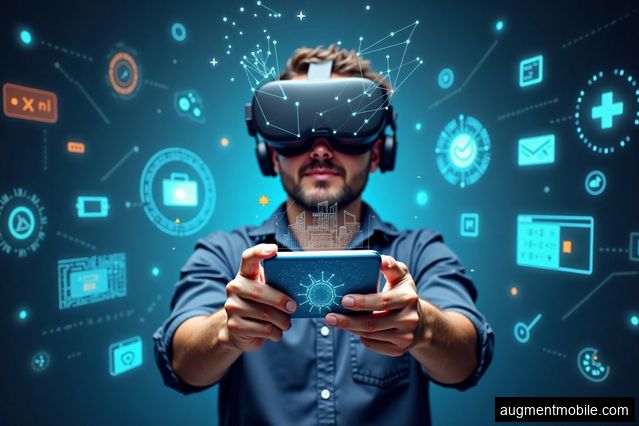
Augmented reality (AR) has emerged as a powerful tool in educational apps, transforming the way students learn and engage with educational content. By overlaying virtual elements onto the real world, AR provides a highly interactive and immersive learning experience. Students can visualize complex concepts in 3D, manipulate virtual objects, and explore interactive simulations. This hands-on approach to learning not only enhances understanding but also fosters critical thinking and problem-solving skills.
Engaging Students Like Never Before
One of the key advantages of incorporating AR into educational apps is its ability to captivate and engage students. Traditional learning methods often struggle to hold students' attention, leading to disinterest and reduced learning outcomes. Augmented reality changes this dynamic by making learning fun and interactive. Students become active participants in their learning journey, eagerly exploring virtual worlds, conducting experiments, and solving puzzles. This high level of engagement not only improves knowledge retention but also sparks curiosity and a love for learning.
Empowering Personalized Learning
Augmented reality opens up new possibilities for personalized learning experiences. By tailoring content to individual students' needs and preferences, AR apps can provide a customized learning path. Students can learn at their own pace, reviewing difficult concepts or diving deeper into areas of interest. AR also allows for adaptive learning, where the app can analyze students' performance and provide real-time feedback and guidance. With AR, every student can have a unique learning experience that caters to their specific strengths and challenges.
Breaking Down Barriers
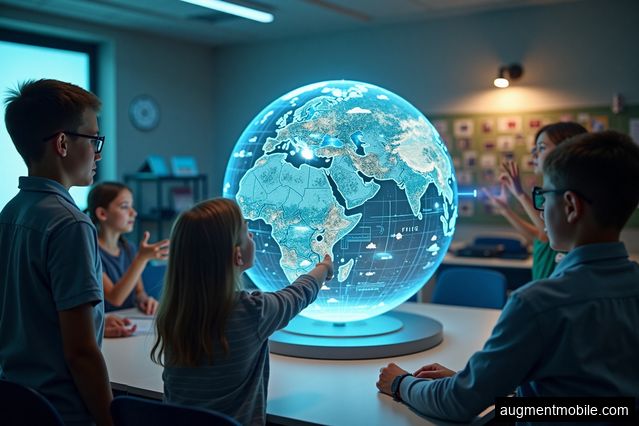
Another significant impact of augmented reality in educational apps is its ability to break down barriers to learning. AR can bridge the gap between theoretical knowledge and real-world application by providing interactive simulations and virtual experiences. For example, students can explore ancient civilizations, witness historical events, or travel to different parts of the world without leaving the classroom. This accessibility enables students to gain practical knowledge and cultural understanding that would otherwise be challenging or impossible to achieve.
Fostering Collaboration and Social Learning
Augmented reality not only enhances individual learning experiences but also promotes collaboration and social learning. AR apps can facilitate group projects and cooperative learning by allowing students to interact with virtual objects or characters together. Students can collaborate in problem-solving activities, conduct virtual experiments, or even create and share their own AR content. This collaborative aspect fosters teamwork, communication skills, and the ability to work effectively in a group setting. AR apps can also connect students from different locations, enabling them to collaborate and learn together regardless of physical distance.
Preparing Students for the Future
In a rapidly evolving digital world, it is crucial for students to develop skills that will prepare them for the future. Augmented reality not only enhances traditional subjects like science, mathematics, and history but also introduces students to emerging technologies. By engaging with AR in educational apps, students become familiar with cutting-edge tools and technologies, fostering digital literacy and adaptability. This exposure to AR prepares them for careers in fields such as engineering, architecture, healthcare, and marketing, where AR is already making significant strides.